
- Investigations
- Timeline Analysis
Timeline Reconstruction: The Foundation of Every Investigation
A clear and accurate timeline is the backbone of any missing persons investigation. Here's how digital forensics can help build one even when witnesses and physical evidence fall short.
Why Timelines Matter
When someone goes missing, one of the first questions investigators ask is: what happened, and in what order? Establishing a clear sequence of events allows investigators to identify the last known location, understand the circumstances surrounding the disappearance, and prioritize leads.
Building a reliable timeline from witness statements alone is often difficult. Memories are fallible, witnesses may have incomplete information, and there are often significant gaps. This is where digital forensics plays an invaluable role.
Constructing a Digital Timeline
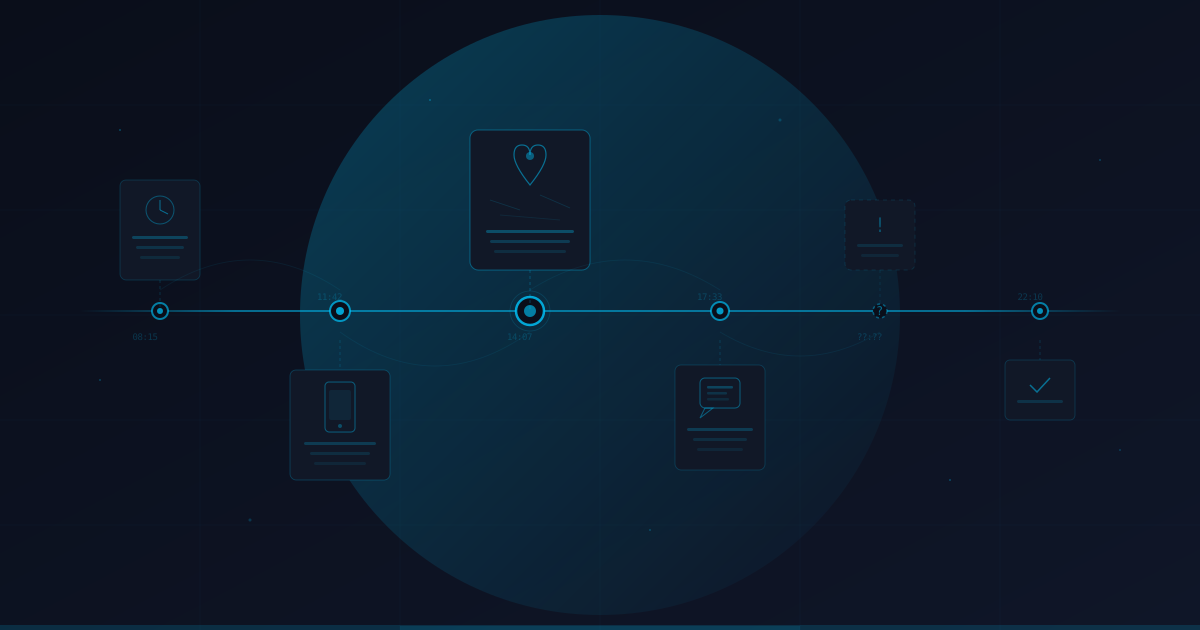
Digital devices and services generate timestamps automatically and continuously. Unlike human memory, these records don't degrade over time (though they may be deleted). By correlating data from multiple sources, investigators can construct highly detailed timelines.
Layer 1: Device Activity
The most immediate source of timeline data is the person's own devices. Activity logs on smartphones show:
- When the device was powered on or off
- When specific apps were opened and closed
- When messages were sent or received
- When photos were taken (with precise timestamps and often GPS coordinates)
Layer 2: Communication Records
Call and messaging records provide a chronological record of who the person was in contact with and when. These records can help establish:
- The last known communications
- Whether communications abruptly stopped
- Any patterns in communication behavior in the days before the disappearance
Layer 3: Movement Data
Location data from GPS, cell towers, and Wi-Fi access points can establish where a person was at specific times. Combined with device activity data, this can paint a detailed picture of movement patterns.
Identifying Gaps and Anomalies
One of the most valuable aspects of timeline reconstruction is not just what the data shows, but what it doesn't show. Gaps in activity can be as informative as the activity itself.
A sudden cessation of all digital activity — no messages, no app usage, no location pings — may indicate a significant event occurred. Similarly, unusual activity patterns or activity in unexpected locations can flag moments requiring closer investigation.
From Timeline to Leads
A completed digital timeline doesn't just tell a story — it generates leads. It may reveal:
- Last known contacts who haven't been interviewed
- Locations the person visited that weren't previously known
- Online activity that suggests intent or context
- Discrepancies between witness accounts and digital records
At EchoTrace Intelligence, timeline reconstruction is a core part of our analytical process. We work methodically to build the most complete and accurate timeline possible, ensuring that investigators have the foundation they need to pursue every available lead.